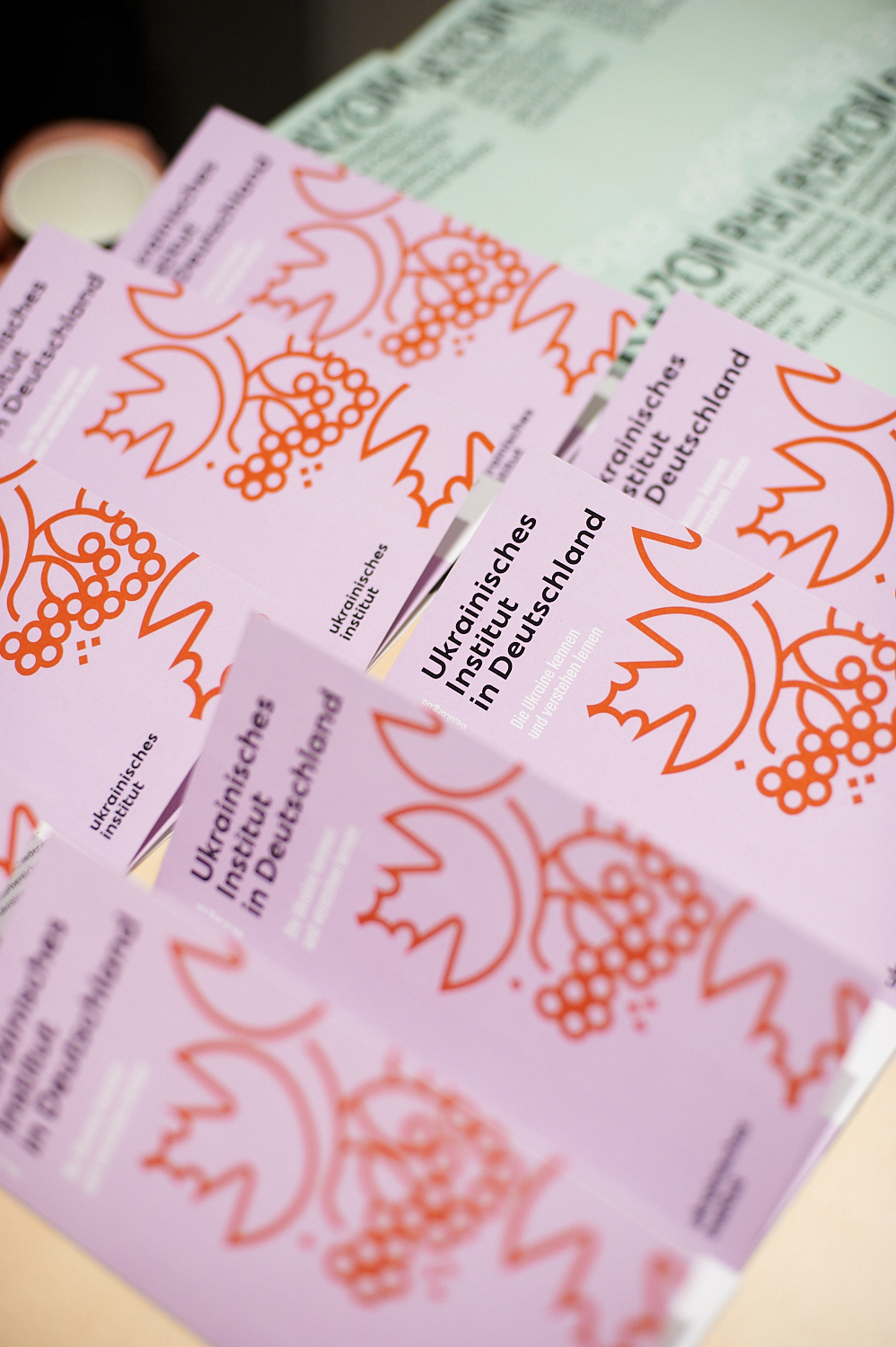
From 15–18 September 2026, we had the opportunity to take part in the RHIZOM/RAZOM Conference in Ivano-Frankivsk, dedicated to “Decolonisation, Resilient Democracy, and Cross-Border Cooperation in the Cultural Sector.” The conference marked the culmination of the second edition of the RHIZOM/RAZOM cultural cooperation programme, initiated by the Ukrainian Institute in Germany and Insha Osvita and funded by the Federal Foreign Office of Germany.
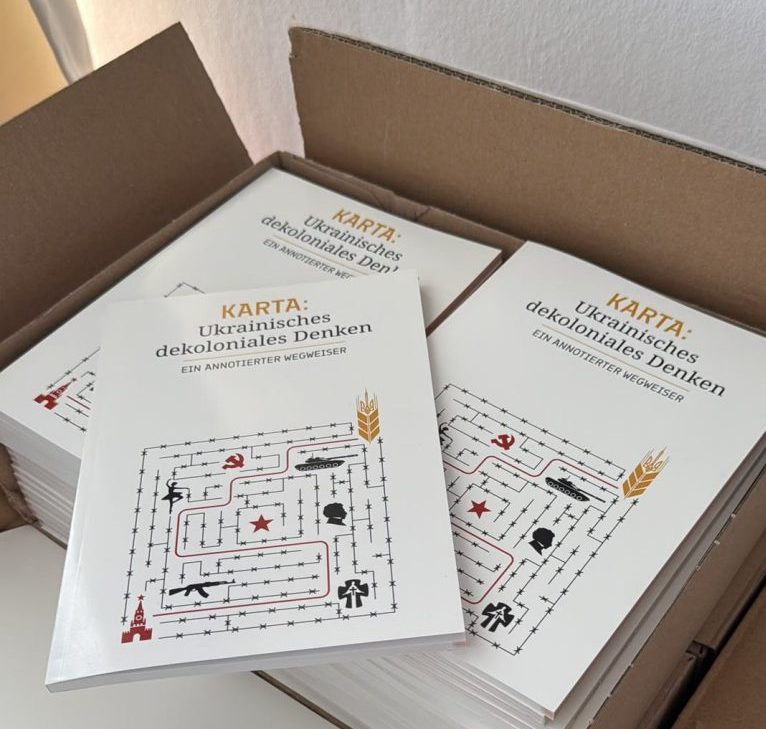
For us at Dialogkraft Europa, it was a particularly meaningful occasion: together with Olha Konovalchuk from the Vinnytsia Branch of the Ukrainian Library Association, we presented our project KARTA: An Annotated Map of Ukrainian Decolonial Thought.
Bringing KARTA into the conversation
KARTA grew out of a simple but important question: How can Ukrainian decolonial thought become more accessible to audiences beyond Ukraine?
The project brings together Ukrainian perspectives on history, culture, identity and decolonisation and introduces them to German-speaking and international audiences. Presenting KARTA in Ivano-Frankivsk therefore felt especially fitting. Rather than speaking about decolonisation as an abstract theoretical concept, the conference created a space to discuss how it is already being negotiated through cultural work, education, research, memory practices and international cooperation.
Our presentation was also an opportunity to reflect on what we have learned while developing KARTA – and on where the project could go next. The conversations following the presentation gave us new ideas, contacts and, most importantly, motivation to continue developing the project.
Decolonisation beyond theory
The programme offered an impressive range of perspectives. Discussions addressed democracy and resilience, contested socialist heritage, memory and resistance, environmental histories, artistic practices and the broader question of what decolonisation means for Ukraine today.
One of the most memorable experiences for us was the “Unboxing” workshop at Asortymentna Kimnata. Instead of beginning with established interpretations, participants encountered artworks through observation, conversation and collective interpretation. It was a wonderful example of how complex questions of history, identity and decolonisation can be approached through participatory cultural practice.
This combination of academic discussion and hands-on formats was particularly inspiring. It showed how decolonial work can move between research, art, education and everyday cultural practice – and how much can emerge when people from different professional and national contexts work on these questions together.
What we are taking home
What made RHIZOM/RAZOM special was not only the programme, but above all the people. We met cultural practitioners, researchers, educators, artists and civil-society actors from Ukraine and Germany who are developing thoughtful and courageous ways of working across borders.
We came home with many new insights, conversations that we want to continue, potential collaborations – and a long list of new ideas.
For Dialogkraft Europa, this experience also reaffirmed something central to our work: meaningful international cooperation is not simply about presenting finished projects to one another. It is about creating spaces in which knowledge can circulate, assumptions can be questioned and new ideas can emerge together.
We are deeply grateful to the organisers, partners, speakers and participants who created such an open and stimulating environment.
And after presenting KARTA in Ivano-Frankivsk, one thing is certain: this is not the end of the project. It has given us even more motivation to keep working, expanding the conversation and building new connections between Ukraine and Germany.


Photos by: Anton Kuba